Foil assist has gone from niche experiment to one of the most talked-about upgrades in foiling. If you've tried to choose an electric foil assist lately, you'll know it isn't simple. Each brand mounts differently, works differently and promises different things, and the market is still settling. When we decided to stock a foil assist kit at Pakaʻa Foil, we compared the options carefully. This article explains what we found, where the market stands, and why we chose the Manta TakeOff Evo, which has the highest-rated motor of any commercial foil assist right now.
What Is Foil Assist and How Does It Work?
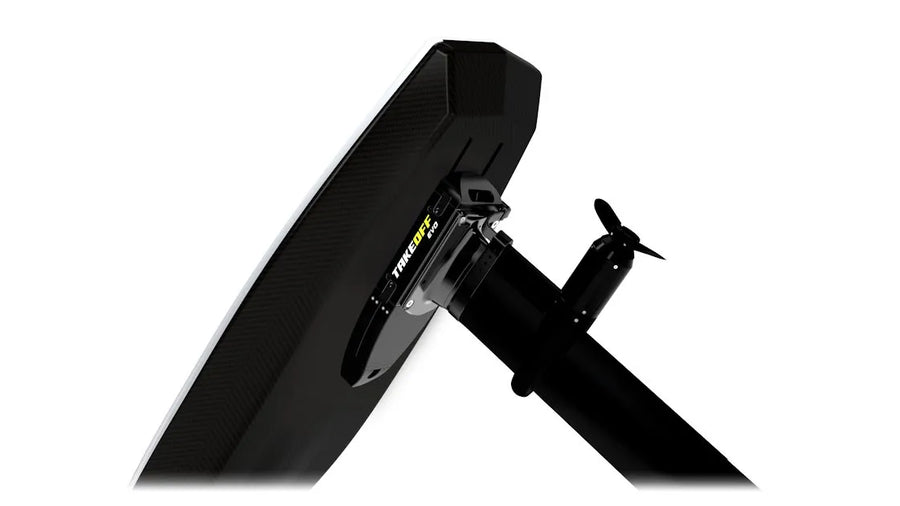
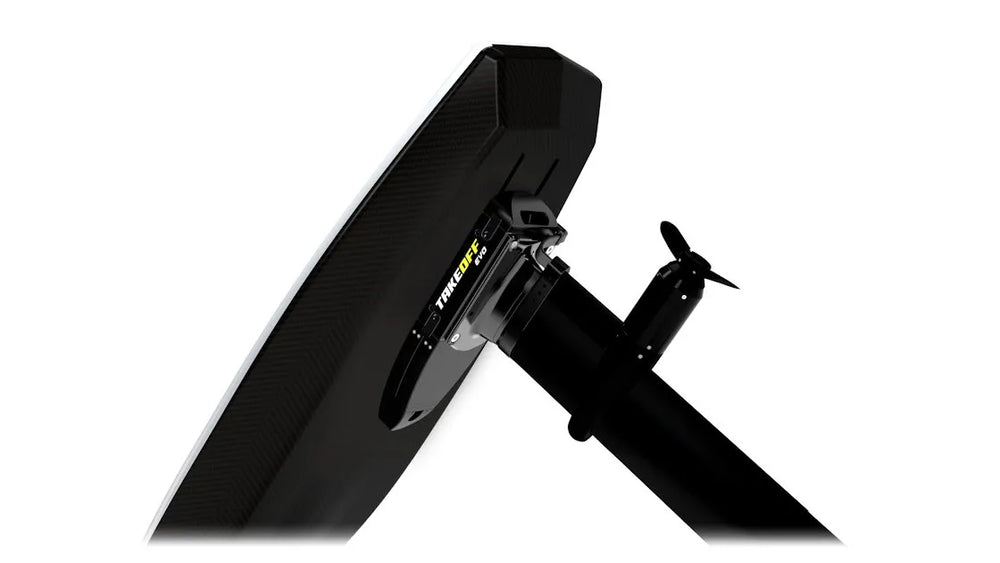
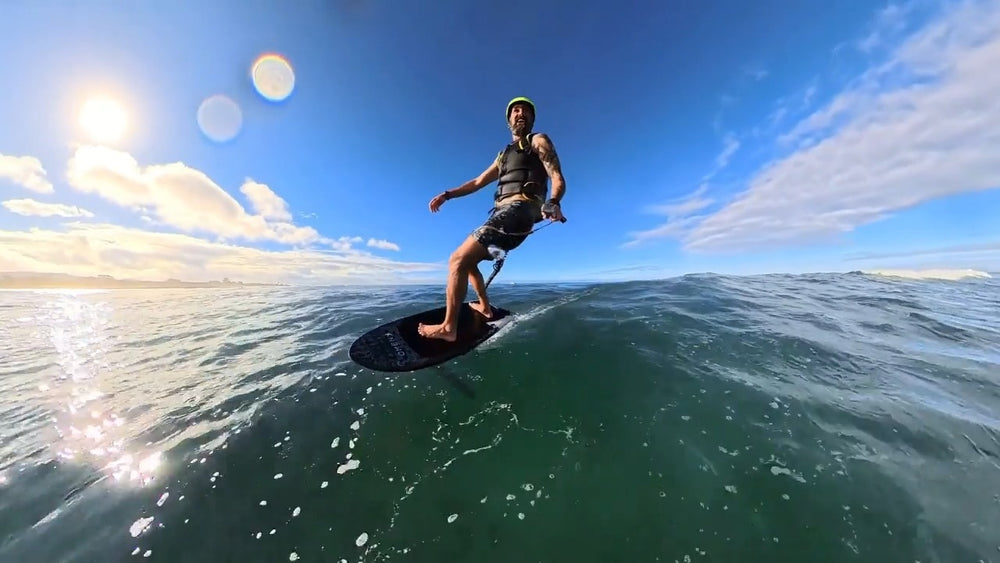
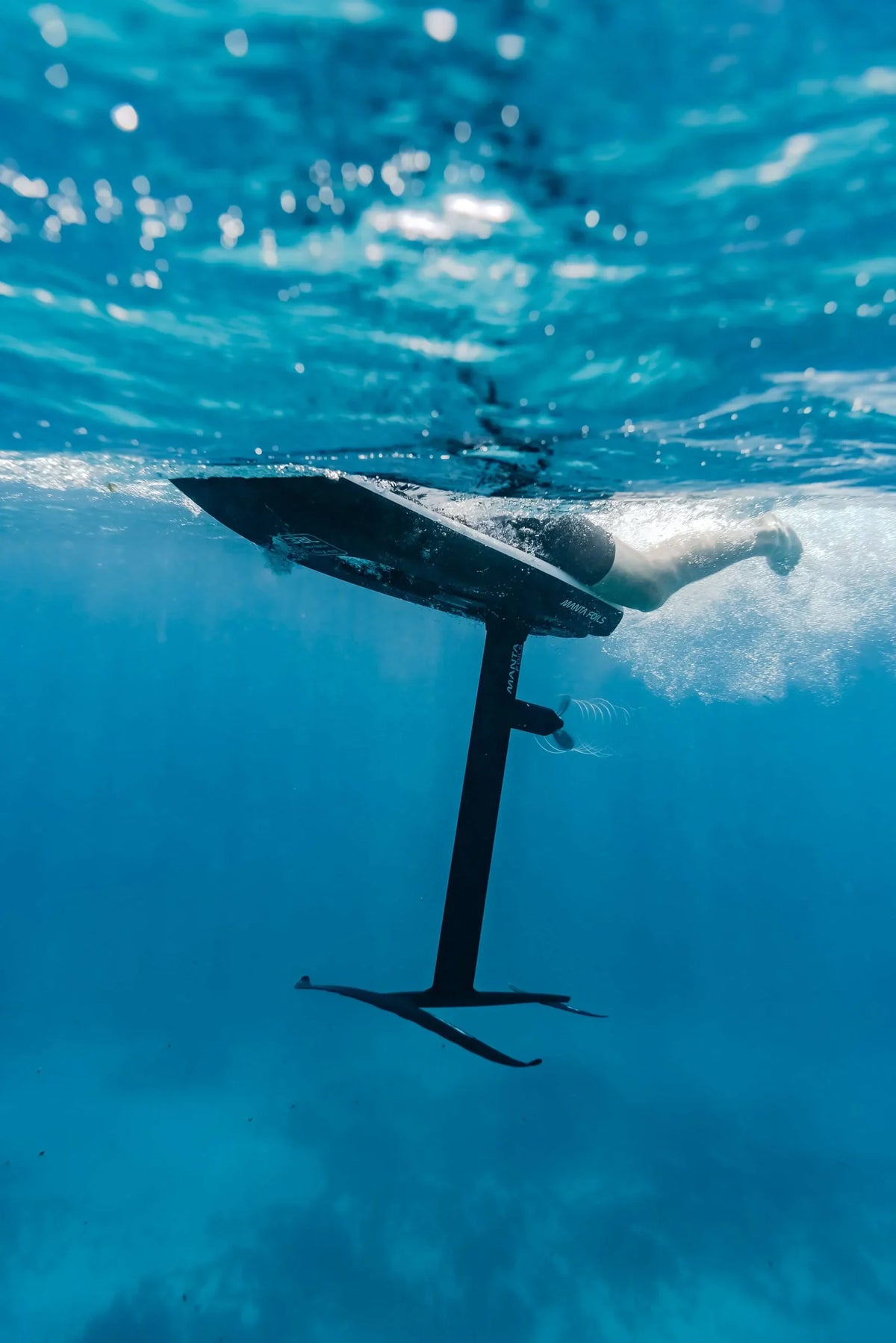
So, what is a foil assist? It's a small foil board motor that clips to your mast, with a propeller and a battery, giving you a boost when you need it. That might mean getting up on foil on smaller non-breaking waves, in light wind, catching a bump on a downwinder, or getting back out through the break when prone foiling.
How does a foil assist work in practice? You use the motor to get up and flying, then switch it off and ride under your own power. Run time depends on the battery. Manta TakeOff Evo gives about 15 to 20 minutes of continuous motor time on one Air battery and up to 65 to 70 minutes on an Air and an Endurance battery together, and in normal use the motor only runs in short bursts.
The appeal is simple. You get more sessions in marginal conditions, fewer exhausting paddle starts and more time actually riding.
The Foil Assist Market in 2026: Under-Board, Wearable or Both?
The market is splitting in two directions. Some brands build around a fixed format, with the battery mounted under or in the board. Others build around a wearable battery, worn on the body.
That split leaves riders uncertain. If you commit to one format, your kit may not suit your next board or the next discipline you try. New foil assist products and new generations are also arriving quickly. That makes "best foil assist 2026" a hard question to answer, and it's hard to know what will still be supported in a few years. In 2026 alone, Waydoo launched its first foil assist (FoilBoost, in May), Foil Drive replaced the Assist MAX with the MAX+ (September), and Foildash crowdfunded a waist-belt system on Kickstarter (August to September).
For us, one question mattered most. Which system gives riders the most options and the least risk of being locked in?
Foil Drive vs Duotone vs Manta: The Main Foil Assist Systems Compared
Foil Drive is the name most riders know, and the brand writes it as Foildrive. Lots of people searching "foil drive assist" are really asking whether there's a Foil Drive alternative. Others want "foil drive vs duotone" settled. As far as we can find, nobody has published a proper Manta TakeOff Evo vs Foil Drive comparison, so here's ours. We've kept to what we can stand behind and will update it as products change.
| System | Mounting / format | Price (full kit incl. battery and charger) | Notes |
|---|---|---|---|
| Foil Drive (Assist MAX+, Assist Slim, Fusion) | Under the board (unit between mast and board, battery inside it; no wearable option) | About $5,100 (Slim) to $7,700 (Fusion) | Well known and widely stocked |
| Duotone Foil Assist | Motor built into its own mast (eMast); batteries in a hip harness | About $5,700 to $7,000 | Backed by a major watersports brand |
| Waydoo Foil Boost | Unit slides onto the mast below the board; two batteries clip onto the unit | About $2,980 | Lowest price; Waydoo's first foil assist (May 2026) |
| Foil Dash | Battery box on a waist belt; no board option found | Not in shops yet | Crowdfunded on Kickstarter in 2026; claims to fit any mast |
| MANTA FOILS · OUR CHOICEManta TakeOff Evo | On the board (unit between mast and board) or worn in the Manta Backpack | From $5,100 (Starter, 1x Air) to $6,420 (Pakaʻa Pro, 2x Air) at Pakaʻa Foil | 3,500 W, the highest-rated motor of any commercial foil assist right now (see below) |
Full-kit prices include battery and charger, in US dollars, checked October 2026. Prices change often.
Every one of these systems has riders who love it. We're not saying the others are bad. Our point is that most of them ask you to commit to one way of using foil assist.
Where Should the Weight of Your Foil Assist Go: Board or Body?
The "foil assist battery backpack vs under board" question affects more than you'd expect.
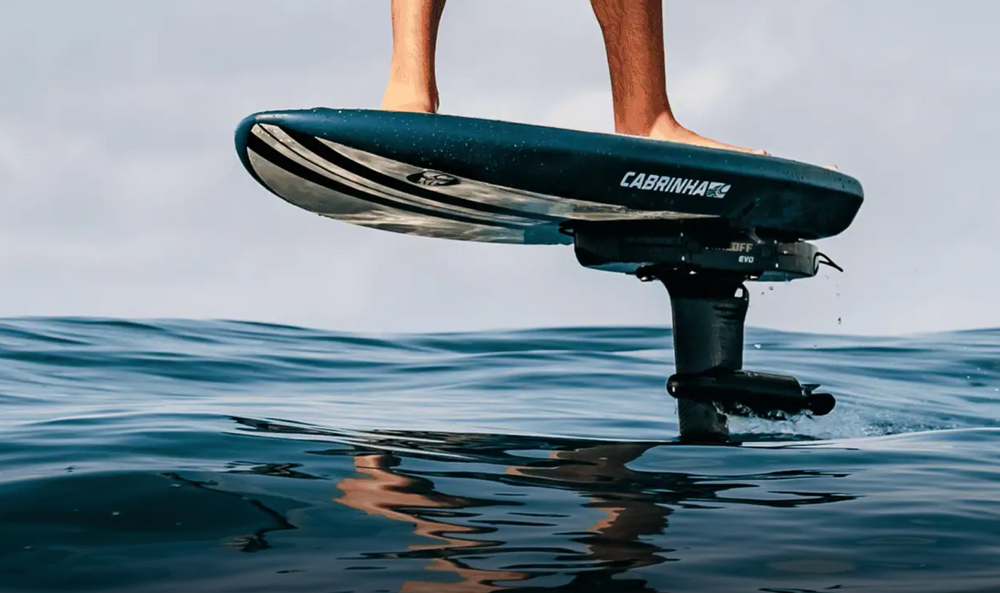
Under-board systems keep everything on the kit, so you carry nothing on your body. The trade-off is that the system is tied to boards that can take it. Riders often ask, "Do I need a trench board for foil assist?" None of the main systems needs a trench or cut-out. Foil Drive and Manta mount through standard foil tracks, with trench boards as an optional extra, and Duotone builds its motor into its own mast.
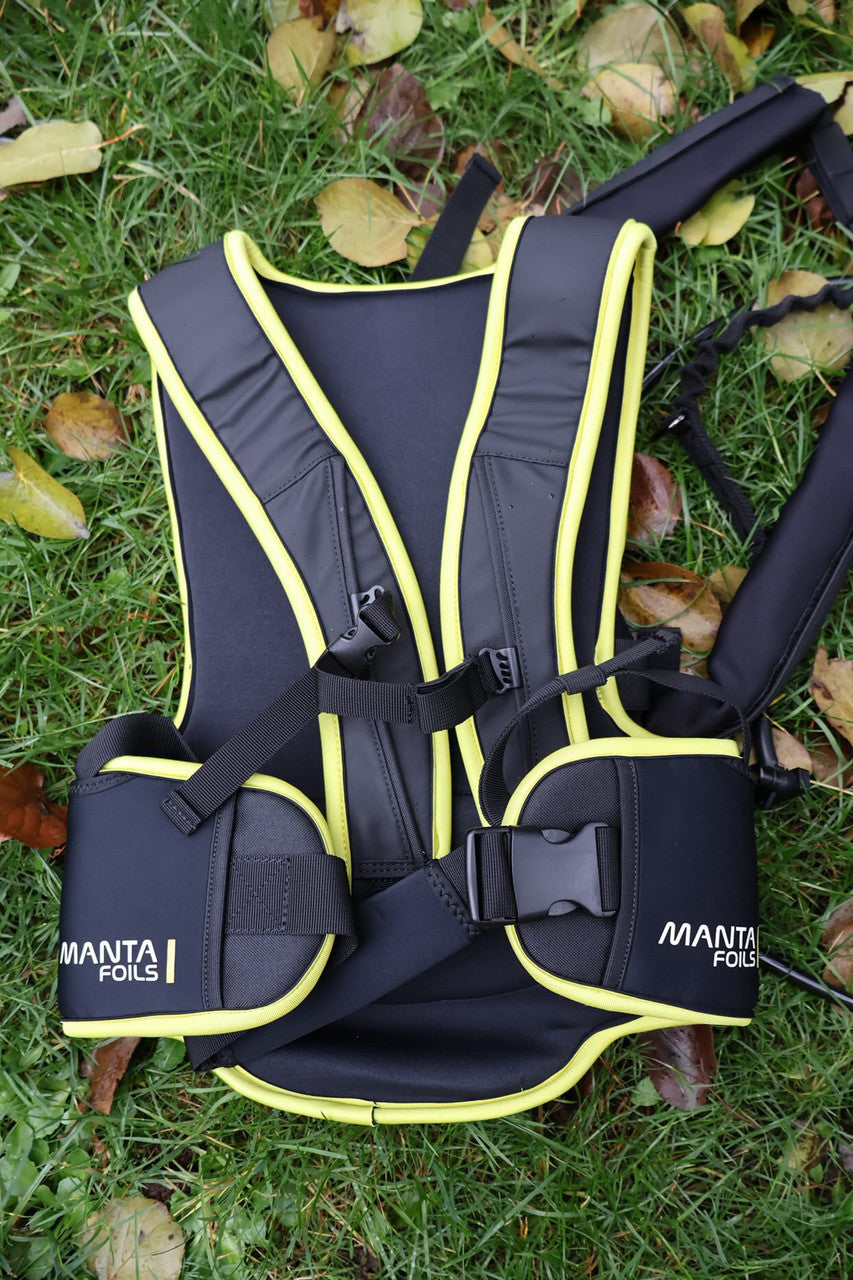
Wearable systems keep the battery on you, connected to the motor on the mast. That can make switching boards easier, but some riders don't enjoy carrying weight in waves or on long downwinders. A power cable runs from the pack to the motor, usually alongside the leash.
Systems that do both let you choose the setup for the day, the board and the discipline. Our guide on where to put the weight of your foil assist explains how each setup feels.
Whatever you choose, check whether the foil assist will fit your mast. Compatible masts vary by brand and profile. Manta says its universal pod fits most foil brands, Waydoo claims 98% of masts, and Duotone supplies its own mast. None publishes a full list, so send us your foil and mast before you buy.
Why We Chose Manta TakeOff Evo: Power, Flexibility and Proven Reliability
Four things made the Manta TakeOff Evo stand out for us.
1. It has the highest-rated motor of any commercial foil assist right now. The TakeOff Evo motor is rated at 3,500 W. That means quick, confident take-offs, even for heavier riders, bigger foils and light-wind days, with plenty in reserve to get you back out through the break.
2. It gives you the most options. The Manta TakeOff Evo can be set up in more than one way, so you aren't locked into a single format. The battery can sit on the board or be worn in the Manta Backpack, the motor can run high on the mast as an assist or at the bottom as an eFoil, and the universal pod clamps to most foil brands' masts. While the market is still deciding which way to go, that flexibility protects your investment.
3. It's proven and reliable. Foil assist kit lives a hard life of salt water, sand, knocks and heat. We wanted a track record, not a first-generation gamble. Manta opened TakeOff pre-orders in December 2023, and the current version is the TakeOff Evo.
4. It travels well. The Air battery splits into two 97 Wh packs (194 Wh in total, good for about 15 to 20 minutes of continuous motor time). Packs under 100 Wh can go in your carry-on, so you can fly with several sets. See the FAQ below for the details.
In short, we chose the system we'd be happiest recommending to a rider who doesn't yet know how their foiling will develop.
Dealer Network, Support and a Watertight Warranty
A foil assist is an electrical product used in the sea, so sooner or later you may need support. Riders asking about the most reliable foil assist are often really asking about the support behind it.
Manta has an established dealer network, so spares and servicing don't depend on one shop or one country. Manta has more than 50 resellers from Hawaii to Sydney, and service centers in the US, Europe, the Middle East and Asia. We're also confident putting our name to the foil assist warranty. Your Manta TakeOff Evo comes with a 12-month warranty against manufacturing defects, and batteries are covered for 12 months or 300 full cycles, whichever comes first.
Wondering where to buy Manta foil assist? We'll be your first point of contact. If something isn't right, you talk to us and we deal with it.
Foil Assist vs eFoil: Which Is Right for You?
- An eFoil is a complete board with an integrated motor and battery, ridden under power the whole time. You can fly on flat water with no wind or waves.
- A foil assist gets you up and flying, then steps back while you wing, pump or catch swell.
So, are eFoils worth it? If you want powered flying on flat water, an eFoil may suit you better, and the same goes for most foil drive vs eFoil questions. Is eFoiling hard to learn? Not very: Lift and Fliteboard both say most people are up and flying in their first session, though it takes a few sessions to feel at home. How much is an eFoil? Most mainstream eFoils cost roughly $4,000 to $15,000. If you already foil, a foil assist adds to the riding you do and usually works with your existing gear. Manta's universal pod is designed to fit most foil brands' masts.
Choosing the Right Foil Assist for Your Riding Style
Foil assist for wing foiling
In light or gusty wind, a foil assist gets you up without endless pumping. Think about whether you want anything on your body while handling the wing.
Foil assist for prone foiling
A boost out the back and onto waves can transform a session, with less pumping to get up. Low drag with the motor off matters here. Manta's prop folds back when you release the trigger, which keeps drag down.
Foil assist for SUP foiling
It takes the strain out of getting onto small bumps and wind swell.
Foil assist for downwind foiling
On a downwind foil run, getting up and linking bumps is the hard part. Less pump foil effort at the start leaves more energy for the run. Enough battery for restarts is key. Manta doesn't publish take-offs per charge. For long runs, pair an Air and an Endurance battery (712 Wh in total).
Frequently Asked Questions
How much does a foil assist cost?
Budget for the full kit: motor, battery, charger and any mounting adapters. In October 2026, complete kits ran from about $3,000 (Waydoo FoilBoost) to about $7,700 (Foil Drive Fusion). Spare batteries add to the total, so ask for a complete quote.
How long does a foil assist battery last?
It depends on rider weight, conditions and how often you restart. Manta rates TakeOff Evo at 15 to 20 minutes of continuous motor time on one Air battery, 35 to 40 on two, 45 to 50 on an Endurance battery and 65 to 70 on Air plus Endurance (70 kg rider at 18 km/h). In normal use the motor runs in short bursts, so a battery covers many take-offs.
Will a foil assist fit my existing mast and board?
Often, but not always. Mast profile, mast length and board construction all matter. Manta's universal pod fits most foil brands' masts and mounts through standard foil tracks, with no trench needed. Tell us your setup and we'll check before you buy.
Can you take a foil assist battery on a plane?
Yes, if each battery is under 100 Wh. In the US, spare lithium batteries must go in your carry-on, not your checked bags. Batteries under 100 Wh are allowed, with no set limit on how many you carry for your own use. Batteries of 100 to 160 Wh need airline approval (two per person), and anything over 160 Wh can't go in passenger baggage at all, which rules out most foil assist batteries. The Manta TakeOff Evo Air battery splits into two 97 Wh packs, so you can take several sets through TSA in your carry-on, up to eight sets (16 packs) in our experience. Airlines can set their own limits, so check with yours before you fly.
Is a foil assist good for beginners, or is it cheating?
It can shorten the frustrating early stage and give you more time on foil per session. Plenty of experienced riders use one too, simply to get more out of marginal days. It's also a great way to learn: we offer foil assist lessons on Kauaʻi, so text us on 808-278-0650 to arrange one.
Can a foil assist be used as an eFoil?
Partly. Manta TakeOff Evo can run continuously at moderate power, and an optional eFoil cable lets you mount the motor at the bottom of the mast. It isn't a full eFoil, though: long spells at full power overheat the controller, which then cuts power.
Foil Drive or Manta: which should I buy?
If you only ever want an under-board setup, Foil Drive is a well-known choice. If you want more power, more mounting options and room to change disciplines, we think the Manta TakeOff Evo is the safer long-term bet.
Do I need to register a foil assist in Hawaii?
Possibly not today, but the rules are still settling. Hawaii's DOBOR (Division of Boating and Ocean Recreation) treats a board with foil assist as a motorboat, even when you're pumping, and new rules for powered foils may be on the way. If foil assist ends up treated like an eFoil, boards may need registering. Today, registration applies to motors of 5 hp or more, and the Manta TakeOff Evo's motor is rated at 3.5 kW (about 4.7 hp) and easy to remove, so it may be exempt.
Manta Foil Assist in Hawaii: Try, Buy and Ride
If you've been searching "efoil Hawaii" or "foil assist Hawaii", you're in the right place. Pakaʻa Foil sells and supports the Manta TakeOff Evo in both setups, mounted on the board or worn in the Manta Backpack, with every battery option, Air and Endurance. We'll talk you through mounting, compatibility, local rules and warranty before you buy. That applies whether you're local to the South Shore of Kauaʻi or ordering from further afield (orders ship from Charleston, South Carolina, to all 50 states).
Browse Manta Foil Assist at Pakaʻa Foil →
Or get in touch for straightforward advice from riders who use the kit. You can also browse all our foil assist kits, or read Who Is Foil Assist For?, our foil assist etiquette guide and the foil assist FAQ. Want to try it first? We offer foil assist lessons, great for beginners and for getting to know the kit before you buy. Text us on 808-278-0650 to arrange one (text is best).