A foil assist is a small electric foil board motor that attaches to your foil mast and gets you up and flying, then lets you ride under your own power. This page answers the questions riders ask us most about using, charging, looking after and riding a foil assist. If you're choosing a kit, our foil assist category page covers price, battery life and fit. Our article Why We Chose Manta compares the main systems. We chose the Manta TakeOff Evo because it has the highest-rated motor of any commercial foil assist right now.
The basics
What is a foil assist?
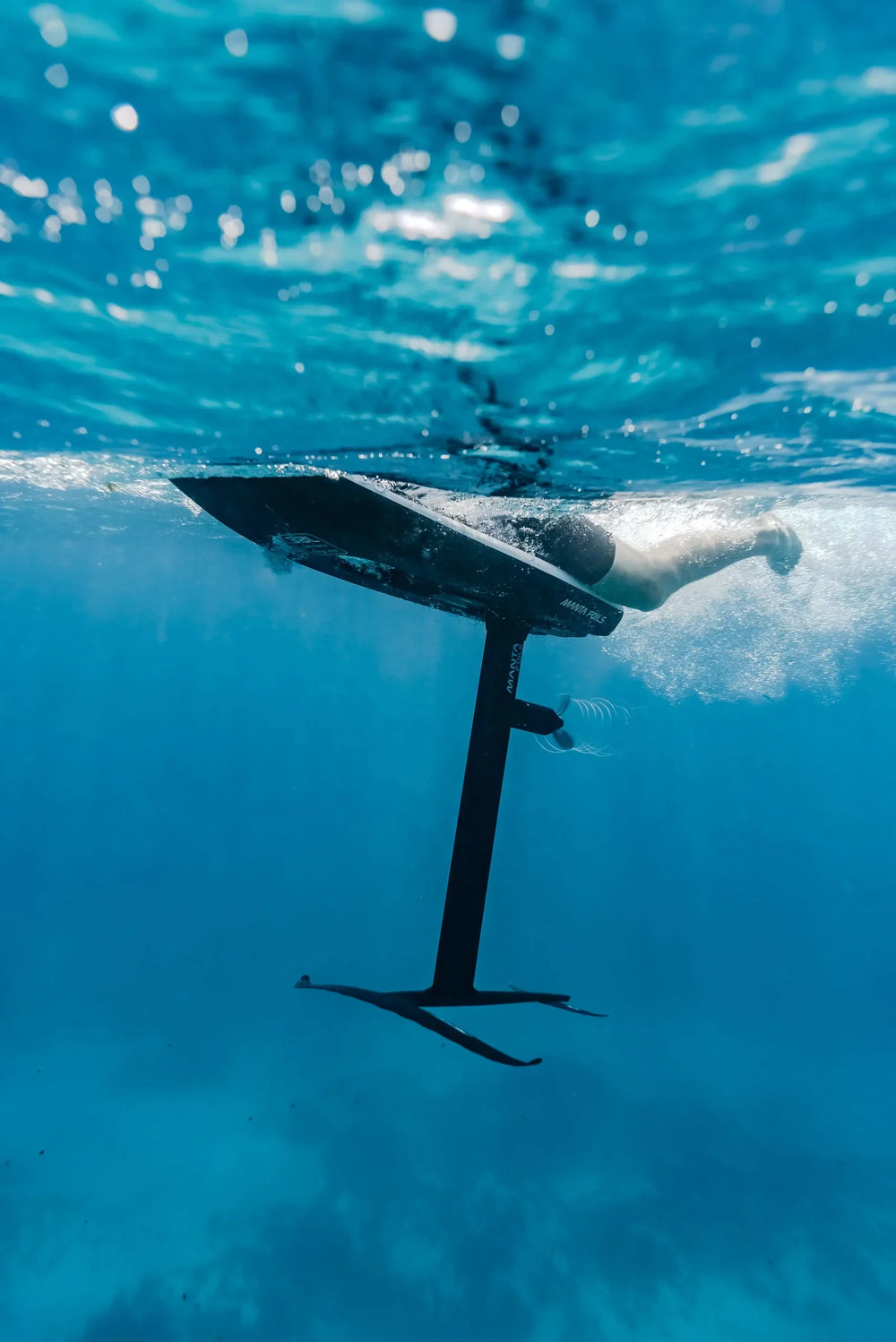
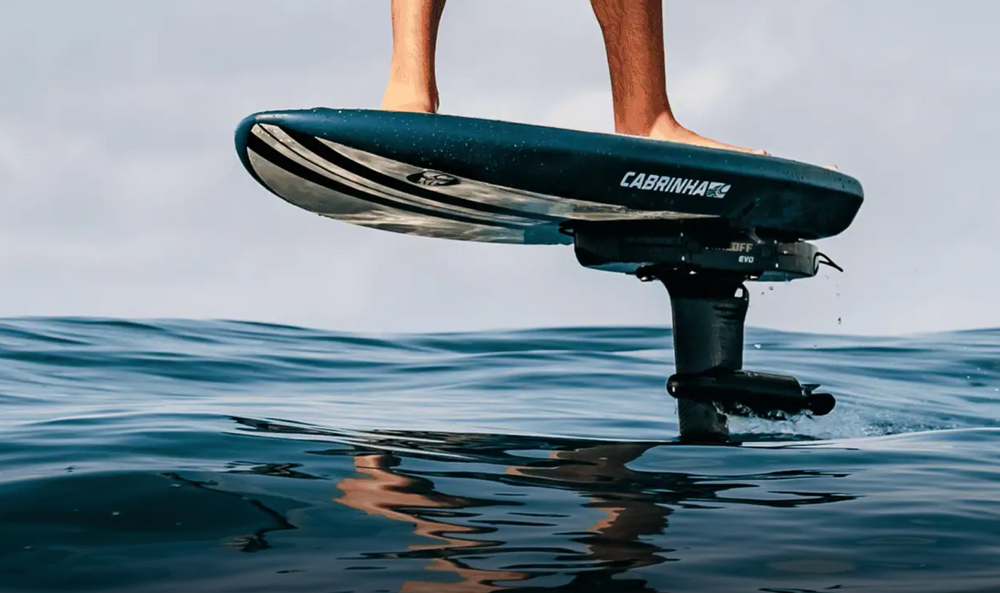
A foil assist is a compact electric motor and propeller that mounts on a hydrofoil mast, powered by a rechargeable lithium battery. You use it for short bursts of power to get up on foil, then switch it off and ride as normal. It works with wing, prone, SUP and downwind foiling.
Is a foil assist the same as a foil board motor?
Yes. "Foil board motor" is a common way of describing a foil assist. Both mean a motor that helps an unpowered foil board take off, as opposed to an eFoil, which has the motor and battery built in and runs the whole time.
Why do some people call every foil assist a "Foil Drive"?
Foil Drive (written Foildrive by the brand) was one of the first well-known foil assist systems, so its name is often used for the whole category. Other brands make foil assists too, including Manta TakeOff, Duotone and Waydoo. Our system comparison sets out the differences.
How fast does a foil assist go?
A foil assist is built to reach take-off speed, not to cruise fast. Top speed depends on the system, the prop, the rider's weight and the foil.
How much does a foil assist weigh?
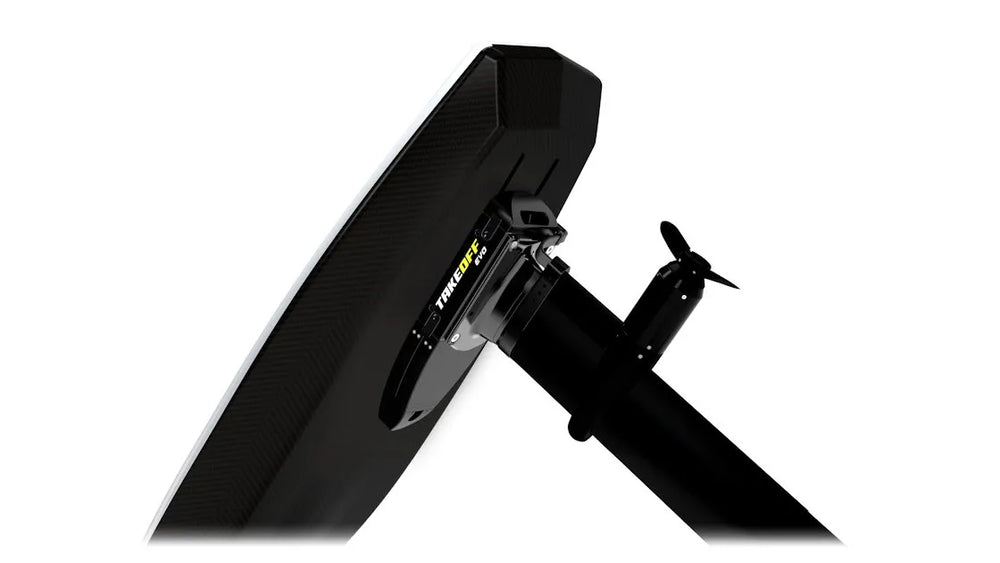
Most of the weight is in the battery. The motor pod on the mast is small. On Manta TakeOff Evo, the motor pod weighs 2.0 kg and the main unit with one Air battery 2.5 kg, so a complete setup starts at about 4.5 kg.
Does a foil assist slow you down when it's switched off?
A little, because the motor pod on the mast adds some drag. Systems reduce this with a slim pod and a propeller that folds or stops cleanly when the motor is off. Manta TakeOff Evo uses a folding prop that opens under power and folds back when you let go of the trigger.
Riding with a foil assist
How do you control a foil assist?
Most systems use a waterproof wireless remote, usually worn on the hand or wrist, with a throttle trigger or buttons. Manta TakeOff Evo uses a handheld remote with a trigger, buttons and a display, supplied already paired to the unit.
Is it hard to learn to ride with a foil assist?
Most foilers get the hang of it within a few sessions. The new skill is using the throttle smoothly and switching off at the right moment, once you're up and flying. Start in open, flat water, away from other people, before you take it into waves. If you're new to foiling itself, start with how to ride a hydrofoil. A foil assist is also a great way to start foiling from scratch. We teach foil assist lessons for beginners on Kauaʻi: text us on 808-278-0650 to arrange one.
Can I use a foil assist in waves?
Yes. Prone and SUP foilers use it to get out the back and catch waves earlier. Always switch off before you enter a crowded lineup, and see our foil assist etiquette guide for how to share waves fairly.
How many take-offs can I get from one charge?
That depends on rider weight, conditions and how long each boost lasts. Short, efficient take-offs stretch a battery much further than long motoring. Manta rates one Air battery at 15 to 20 minutes of continuous motor time and an Endurance battery at 45 to 50 minutes.
Can I use a foil assist on lakes and rivers?
Yes, foil assists work in fresh water as well as salt water. Check local rules first, because many lakes and reservoirs restrict motorized craft.
Safety
Is a foil assist safe?
A foil assist is safe when used sensibly, but it adds a spinning propeller to a sharp foil. Wear a leash, a helmet and an impact vest, keep well clear of swimmers and other riders, and switch the motor off before anyone comes near.
What happens to the motor if I fall?
On most systems the motor stops as soon as you release the throttle. Many also stop if the remote loses its connection. Check how your system behaves before you ride. On Manta TakeOff Evo, releasing the trigger stops the motor, and you can set a short cut-out delay in case the remote loses signal.
Is it safe to have a lithium battery in the sea?
Foil assist batteries are sealed for use in salt water. Don't use or charge a battery whose case or connectors are cracked, swollen or corroded. Manta describes its motor as fully enclosed and its battery connection as watertight.
Battery and charging
How long does a foil assist battery take to charge?
Charging times vary with battery size and charger. For Manta TakeOff Evo, an Air battery charges in about 30 minutes and an Endurance battery in about 1 hour 20 minutes on the fast charger, or roughly twice as long on the standard charger.
How should I store the battery between sessions?
Store it somewhere cool and dry, out of direct sun and out of a hot car. For longer breaks, lithium batteries generally last best part-charged rather than full or flat. Follow the manufacturer's storage guidance. Manta recommends storing its batteries at 50% charge or more.
How long does a foil assist battery last before it needs replacing?
Lithium batteries slowly lose capacity with each charge cycle and with age. Looking after the battery well (no storing it flat, no heat) keeps it going longer. Manta's battery warranty covers 12 months or 300 full cycles, whichever comes first.
Care and maintenance
How do I look after my foil assist after a session?
Rinse the motor, prop, mount and battery in fresh water, then let everything dry before storing it. Check the propeller for nicks and the connectors for sand or corrosion. Manta recommends rinsing with the batteries plugged in, flushing the shaft seals, and greasing the battery connectors before every session.
Can I service a foil assist myself?
Basic aftercare, yes: rinsing, drying and checking the prop and connectors. Leave anything inside the motor or battery to the manufacturer or dealer, because opening it can void the warranty. We're your first point of contact for Manta TakeOff Evo servicing. Manta designs the TakeOff Evo so owners can replace props, pods, connectors and batteries themselves, but opening the motor or battery, or fitting third-party parts, voids the warranty.
Rules and where to ride
Do I need to register a foil assist in the US?
It depends on the state. Many states treat a board with a motor as a motorized vessel, which can mean registration, speed limits near shore or no-go zones. Check with your state's boating agency before you ride. For Hawaii's rules, see Foil Assist in Hawaii.
Where can't I use a foil assist?
Expect restrictions near swimming areas, harbors, marine reserves and some surf breaks. Local rules come first, and wherever you ride, keep well away from swimmers and unpowered craft such as surfers, paddlers and canoes. Our foil assist etiquette guide covers riding considerately where powered foils are allowed.
Owning a foil assist
Can I move my foil assist between boards?
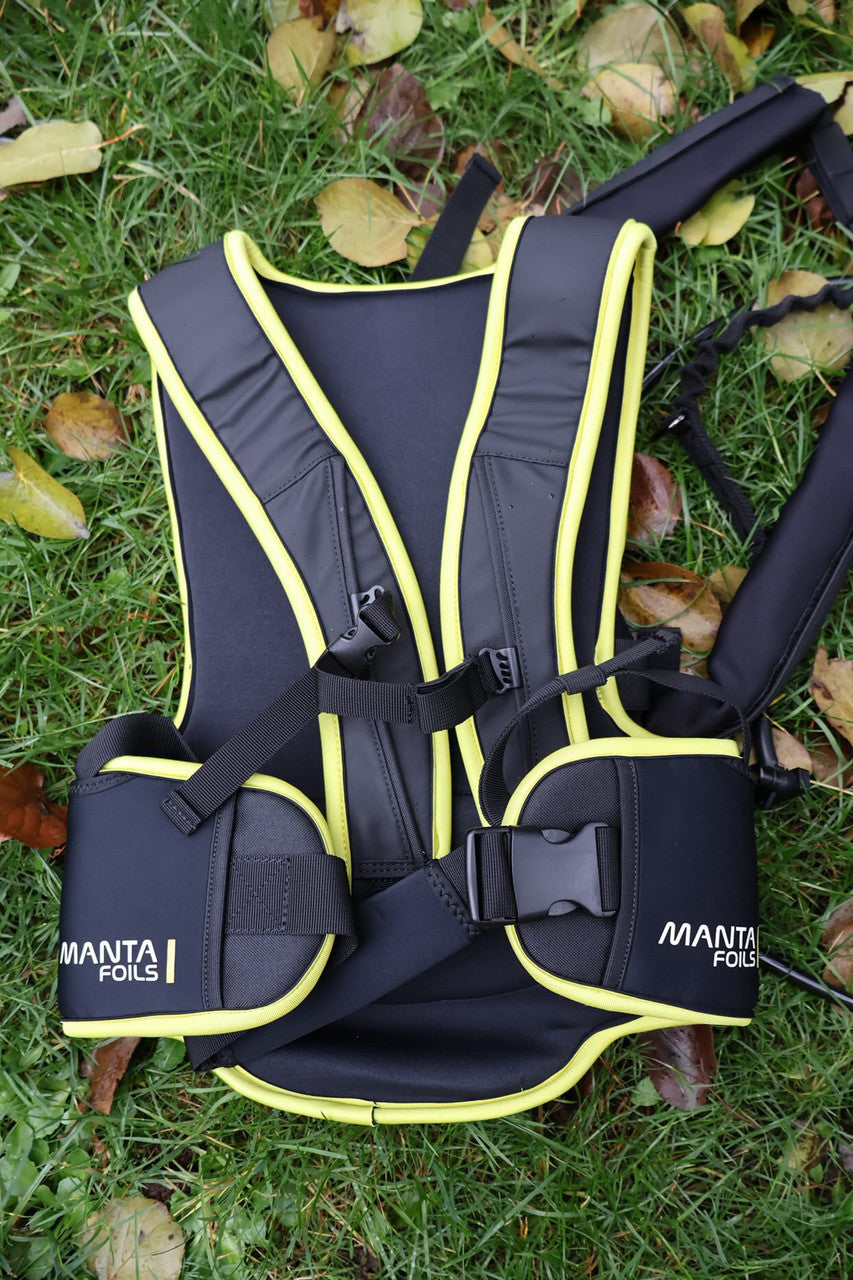
It depends on how the system mounts. Some fix the battery to one board, while others are designed to move between boards and disciplines. Manta TakeOff Evo is built to be flexible here: the battery can sit on the board or be worn in the Manta Backpack, and we sell and support both setups. Our guide on where to put the weight of your foil assist covers how each feels.
Is a second-hand foil assist worth buying?
It can be, but the battery is the part to check. Ask how old it is, how many charge cycles it has done and whether any warranty transfers to you. Manta's warranty covers the original purchaser only, so it doesn't transfer to a second owner.
Is a foil assist right for me?
If you already foil and want more sessions in marginal conditions, probably. It's also a good way to learn to foil in the first place, and we teach beginners on Kauaʻi. Our guide Who Is Foil Assist For? goes through each type of rider.
Looking for something else?
Still have a question? Ask us. We ride the kit and we'll give you a straight answer. Text us on 808-278-0650 (text is best).